
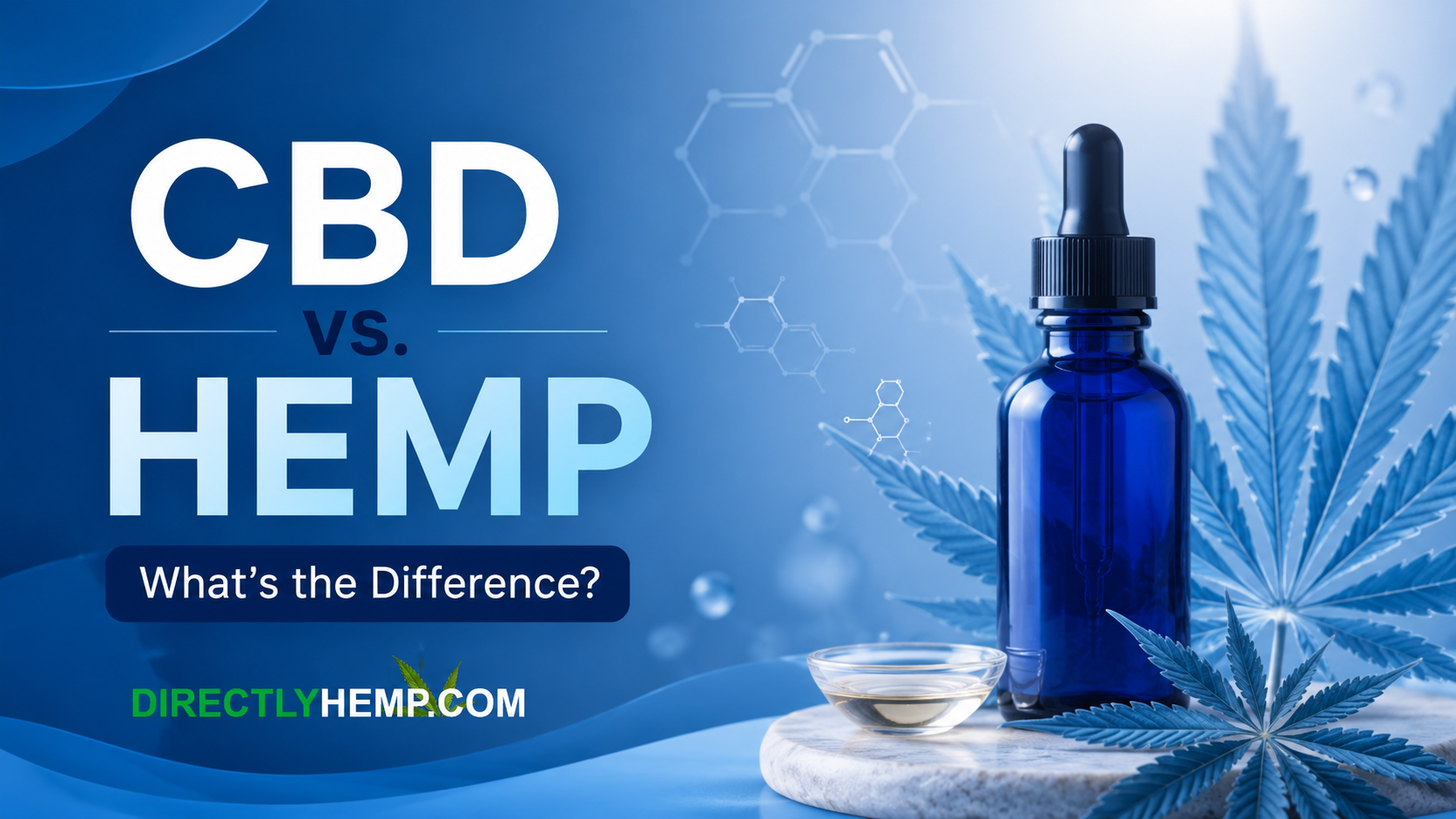
- CBD vs hemp
- HempWorx CBD oil
- hemp seed oil
- full spectrum CBD
- HempWorx
Hemp oil and CBD oil sit next to each other on the shelf and often cost very different amounts. The difference comes down to which part of the plant was used and what ended up in the bottle.
Hemp is the plant, CBD is one compound inside it
Hemp is a variety of cannabis grown legally in the United States with no more than 0.3 percent THC. It is a crop, the same way a lemon tree is a crop. CBD, short for cannabidiol, is one of more than a hundred naturally occurring compounds found inside that crop. So hemp is the source and CBD is one thing you can pull out of it.
That single distinction explains most of the confusion shoppers run into. Two bottles can both honestly say hemp on the label while containing completely different things, because one may be pressed from seeds and the other extracted from the flower and leaves.
Hemp seed oil versus hemp extract
Hemp seed oil is pressed from the seeds. It is a food oil, rich in omega fatty acids, and it contains virtually no CBD. You will find it in cooking oils, salad dressings and skin moisturizers, and it is usually inexpensive because seeds are easy to press at scale.
Hemp extract is taken from the flowers, leaves and stalks, where the cannabinoids actually live. This is where CBD comes from. When a product is labeled CBD oil, it should be hemp extract measured in milligrams of CBD, carried in an oil base such as MCT or olive oil. If a bottle lists no CBD milligram amount anywhere, it is probably seed oil.
How to read a label without guessing
Look for three things. First, a clear CBD milligram total, such as 750 mg per bottle. Second, the words full spectrum, broad spectrum or isolate, which tell you how much of the rest of the plant came along. Third, a third party lab report, sometimes called a certificate of analysis, that confirms the potency and shows the THC level.
HempWorx labels list the CBD total on the front, and every batch is third party lab tested. That is the fastest way to tell a real CBD product from a hemp flavored one.
Full spectrum, broad spectrum and THC free
Full spectrum keeps the natural range of cannabinoids and terpenes from the plant, including trace THC under the legal 0.3 percent limit. Many people prefer it because the compounds appear to work better together, an effect researchers call the entourage effect.
THC free, sometimes labeled broad spectrum, removes detectable THC while keeping other cannabinoids. This is the practical choice for anyone subject to workplace drug testing or who simply prefers zero THC. HempWorx CBD oil is available in both versions in the same milligram strengths.
Which one should you actually buy
If you want nutrition or a light moisturizer, hemp seed oil is fine and cheap. If you specifically want CBD, you want hemp extract with a stated CBD amount on the label, which means a real CBD oil.
The current HempWorx catalog lists tinctures by spectrum and flavour, with the labelled cannabinoid amount on each product page (the older 750 mg name is historical). If you prefer a topical format, Relief cream is applied externally to a specific area of the skin.
Common myths worth clearing up
CBD oil is not the same as marijuana and legal hemp CBD will not get you high, since THC stays under 0.3 percent. Hemp oil in a grocery aisle is not a low cost CBD substitute, because it contains almost no CBD. And a higher milligram number is not automatically better, since the right amount is the one your body responds to.
Price per milligram is the honest way to compare bottles. Divide the price by the CBD milligrams, not by the bottle size, and the market gets a lot easier to read.
A word of caution
These statements have not been evaluated by the Food and Drug Administration. These products are not intended to diagnose, treat, cure or prevent any disease. Talk with your doctor before starting CBD, especially if you are pregnant, nursing or taking prescription medication.
Keep reading on our site
Sources and further reading
These statements have not been evaluated by the Food and Drug Administration. These products are not intended to diagnose, treat, cure or prevent any disease.